

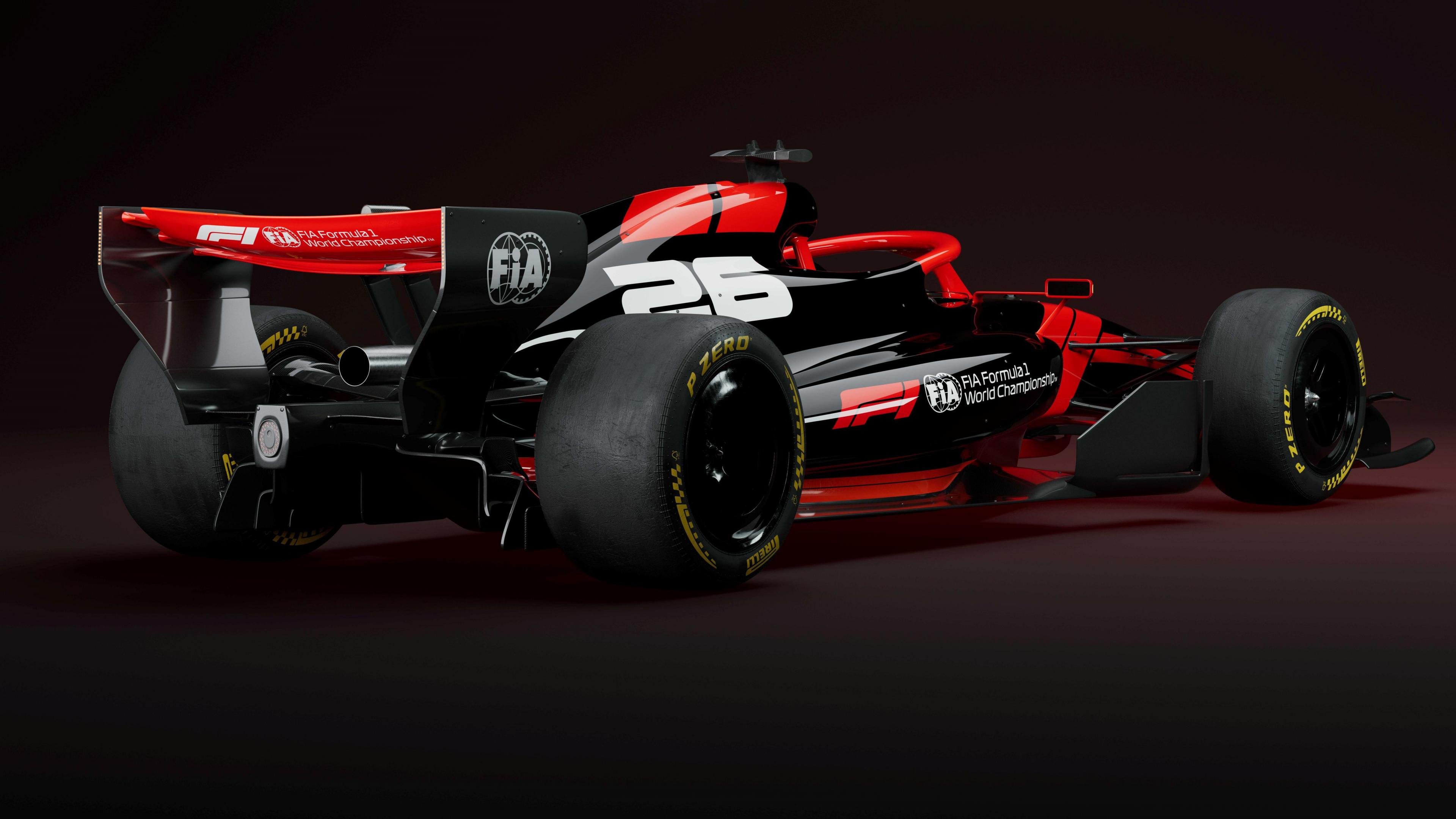
The 2026 cars are expected to be smaller, nimbler and more environmentally friendly than this year.
F1 has revealed the official vocabulary that will be used to explain the technical complexities of its revolutionary 2026 rulebook.
The racing series is implementing what is arguably the most significant technical shift in its competitive history starting in 2026, featuring revised car and engine specifications and the required adoption of eco-friendly fuels.
The revised engines, which maintain the hybrid V6 layout, boast a greatly enhanced electrical capacity, necessitating key advancements in the aero packages.
Throughout races, pilots will carefully oversee ERS energy – sometimes even qualifying laps – to achieve the optimal performance.
Wide-ranging research were carried out with a wide range of fans, including long-time followers and newcomers, to identify which phrases would improve understanding of the key features of the upcoming rules.
The key objective was to present a range of advanced features of the competition as straightforward as possible for the global fanbase.
Consequently, initial designations for some systems – such as "x-mode and z-mode" for the adjustable aero – have been phased out in favor of descriptive names that directly explain the actual function of the innovation.
Key Technical Innovations
The FIA states that competitors will have greater control to determine tactics regarding power usage, regeneration, and efficiency.
The 2026 rules mandate a set of functions that will be visually displayed on TV overlays to improve the audience's understanding of the strategic duel.
- Overtake Mode: This takes over from the current DRS. It provides a short boost of battery power deployable when a competitor is close behind the car ahead to facilitate an overtake.
- Extra Push Mode: This is a manual power boost from the ERS that can be utilized during offensive or defensive moves. It grants the pilot full engine and battery energy at the click of a switch.
Both of these strategic tools will have to be managed carefully, as the available electrical charge is capped.
- Active Aero: Both the front and rear wings move automatically – spreading on the straights for low aerodynamic resistance and increased velocity, and sealing in the bends for optimal cornering performance.
- Energy Harvesting: Drivers can recharge the energy store with energy harvested under braking, or during coasting at the straight's end or in certain corners where only reduced throttle is applied.
Car Design Evolution
The 2026 cars will be more compact and lighter compared to the 2025 spec, with a distance between axles reduced by 200mm to 3,400mm, car width cut by 100mm – down to 1,900mm – and the minimum weight lowered by 30kg.
Total aerodynamic grip is expected to drop by approximately a significant margin, although teams will undoubtedly recover some as they refine their designs.
Aerodynamic drag has been slashed by 40%. The cars will employ moveable wing elements – front and rear wings will move on the straights to improve speed and boost top speed and return into place for optimal grip in corners.
Wheels will continue to use 18-inch wheel rims, but the actual tyres will be narrower, by 25mm at the front and three centimetres on the rear.
Power Unit Revolution
The 2026 engines will have an near-equal balance in power produced by the ICE and the battery and motor, increasing from about 20% electrical this year.
The ERS setup is made less complex through the deletion of the Motor Generator Unit – Heat, the sophisticated and pricey component that recovered energy from the exhaust turbo.
Every car on the grid will be mandated to operate on carbon-neutral fuel, manufactured from organic sources or lab-created processes.


