
Doctors from the Scottish region and the US Achieve World-First Stroke Procedure Via Robot
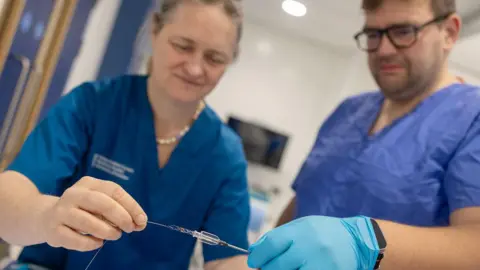
Doctors from the Scottish region and America have successfully completed what is considered a historic stroke procedure using automated systems.
Prof Iris Grunwald, from a Scottish university, conducted the remote thrombectomy - the elimination of blood clots after a cerebral event - on a human cadaver that had been provided for research.
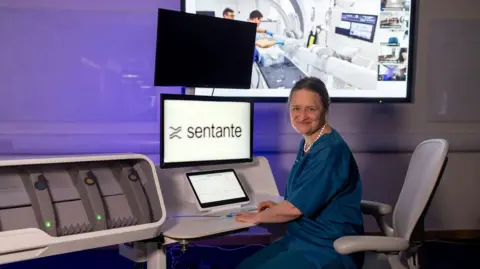
The surgeon was located at a treatment center in the location, while the body she was operating on with the machine was across the city at the university.
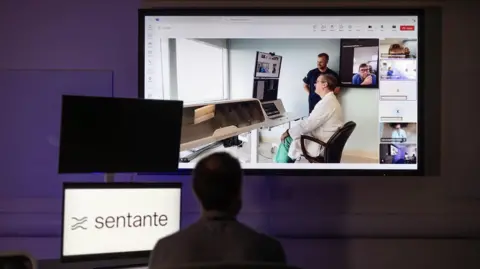
Subsequently, a neurosurgeon from the American state utilized the system to carry out the first transatlantic surgery from his Jacksonville base on a human body in Dundee over significant distance away.
The medical group has described it as a potential "transformative advancement" if it becomes approved for clinical application.
The surgeons consider this innovation could transform stroke treatment, as a limited availability of professional intervention can have a major influence on the recovery prospects.
"It felt as if we were seeing the initial vision of the future," said the lead researcher.
"While in the past this was regarded as theoretical concept, we proved that every step of the operation can currently be accomplished."
The University of Dundee is the worldwide teaching facility of the international stroke organization, and is the exclusive site in the Britain where surgeons can operate on medical specimens with actual blood circulated in the blood pathways to mimic treatment on a actual patient.
"This was the first time that we could execute the complete clot removal operation in a actual human specimen to demonstrate that each stage of the surgery are feasible," stated Prof Grunwald.
Juliet Bouverie, the head of a medical organization, called the transatlantic procedure as "an extraordinary advancement".
"Over extended periods, people living in remote and rural areas have been denied availability to thrombectomy," she added.
"Such technological systems could rebalance the inequity which occurs in medical intervention across the UK."
How does the technology work?
An ischaemic stroke takes place when an artery is blocked by a clot.
This interrupts circulation and oxygenation to the brain, and brain cells lose function and deteriorate.
The superior intervention is a clot removal, where a expert uses catheters and wires to clear the obstruction.
But what happens when a individual is unable to reach a professional who can conduct the operation?
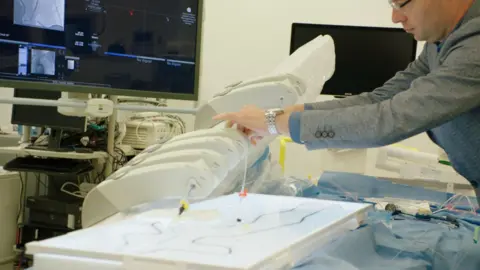
The medical expert stated the trial showed a robot could be attached to the identical medical instruments a specialist would conventionally utilize, and a healthcare professional who is present with the individual could easily connect the instruments.
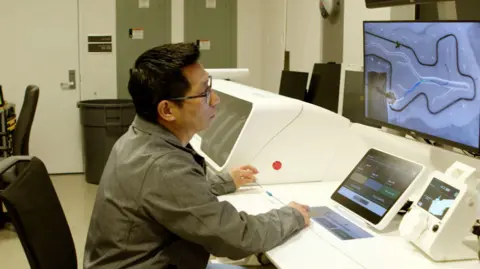
The surgeon, in another location, could then operate and direct their own wires, and the mechanical device then performs precisely identical actions in immediate sequence on the patient to perform the surgical procedure.
The subject would be in a medical facility, while the surgeon could perform the operation with the advanced machine from any location - even their own home.
The lead researcher and the American specialist could observe immediate scans of the specimen in the studies, and monitor progress in real time, with the Scottish specialist saying it took just a brief period of preparation.
Tech giants Nvidia and Ericsson were contributed to the initiative to guarantee the network connection of the automated system.
"To perform surgery from the US to Scotland with a minimal delay - an instant - is genuinely extraordinary," said the neurosurgeon.
The future of stroke treatment
The lead researcher, who has received recognition for her work and is also the senior official of the World Federation for Interventional Stroke Treatment, said there were primary challenges with a standard thrombectomy - a global shortage of surgeons who can conduct it, and intervention relies upon your physical place.
In the region, there are merely three sites people can receive the procedure - Dundee, Glasgow and Edinburgh. If you reside elsewhere, you must travel.
"The intervention is very time sensitive," explained Prof Grunwald.
"For every six minutes of waiting, you have a 1% less chance of having a positive result.
"This system would now offer a innovative method where you're not depending on where you dwell - preserving the precious time where your brain is deteriorating."
Public health data showed there were {9,625 ischaemic strokes|numerous cerebral events|

