

This feature explores extraordinary interviews and stories from around the globe.
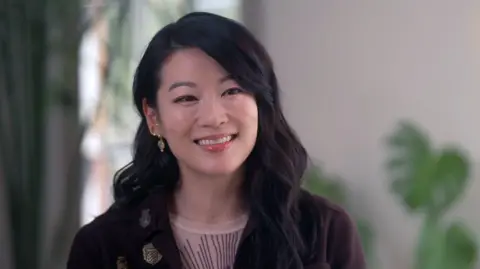
"{I disliked that I looked Asian, that I didn't have light-colored eyes and blonde hair, because those were the beauty standards back then," reveals the actress, who voiced Rumi in Netflix's highly successful movie, the K-pop themed animation.
Cho, 40, recalls her childhood in the southern state, as the eldest daughter of parents who emigrated from Korea and her struggle for acceptance in the United States.
In the movie, which narrates the tale of a girl group who must rescue humanity from evil forces, the protagonist has to accept her true nature as part human, part demon – and when Cho first saw the screenplay, this struck a deep chord.
"Being born in America, feeling American but having people treat me like I'm not, trying to figure out my sense of self as an Asian-American, as a Asian-American, as a woman," she explains.
These were all components of her formative years that paralleled Rumi's journey.
"Truthfully, at different points in my existence, I despised many parts of me and I longed to become a different person.
"During childhood, what you see influences who you become and it seems I just didn't see enough people that look like me."
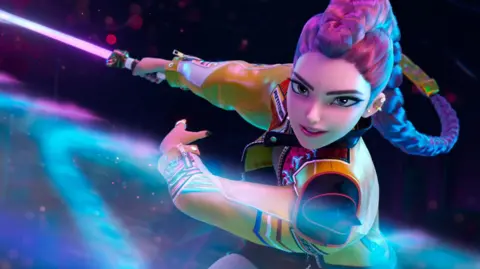
When it launched on Netflix in the summer, KPop Demon Hunters registered millions of streams in just 14 days, and secured the top 10 of the streaming rankings in 93 countries. To be part of the first Hollywood animated film set in Korea, with Korean leads, was for her "an aspiration realized" – but it has also made her a inspiring figure for young Asian-Americans, the kind that she lacked when in her youth.
She says many individuals of Korean descent have expressed it's "such a refreshing moment", making them proud for the first instance of their mixed background and culture.
"In my view Korean pop music really, truly, has paved the way. Korean cosmetics has had such a big impact on Korea being loved. But I feel like this movie is the one that tipped it over the edge, of, everybody wants to go to Korea, now," Cho says.
But the movie's triumph was not guaranteed and the actress admits she felt the team making it were "sometimes facing an uphill battle".
"I feel like it's unfortunate to mention this, but whenever there's an Asian-led project, it's perceived like a gamble," she says.
So, when she took on the role, she made an effort to connect with the entire cast and crew face-to-face, she says.
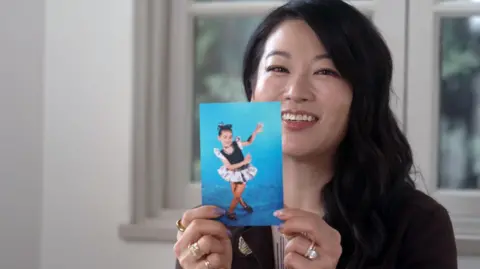
The film was released amid heightened enforcement actions in the US as part of mass deportation efforts, which triggered demonstrations in numerous regions.
As an person of Asian descent living in the US "it's heartbreaking and disappointing," says Cho. "Immigrants have made America what it is."
Reports have estimated that up to one hundred fifty thousand Korean immigrants without proper documentation, including adopted children, are among those who could be deported.
As an adult, Cho came to realise that the prejudice she had encountered when she was younger was largely due to a knowledge gap, as people didn't know what it signified to be Korean or Asian.
"But now, in this day and age, when I feel like the society and people should know better, it's deeply disheartening and sometimes I feel like there's a sense of despair," she expresses.
Because of this, it feels very special, she notes, that the film could bring "optimism and happiness to various groups".
"Maybe that's why it's sort of like this movie of the summer, because we just needed some hope and a unifying element as one."
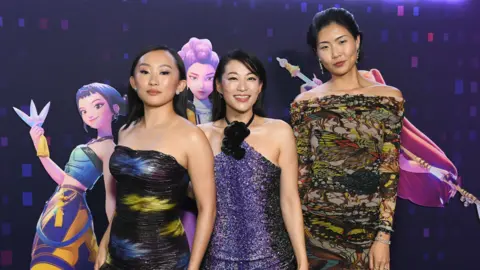
The advancement of artificial intelligence is a major concern for the entertainment sector, creating the potential that in future it could be used to produce a film like the animation.
The actress says she is conscious that AI is already being used to replicate actors' voices, but aims to "maintain faith in people" that audiences will still pursue art created by humans.
"Certainly, I believe they're going to have AI actors and singers. I'm aware they're already here. I know our voices are already being manipulated, but I hope the public have appreciation and want and love for something real."
KPop Demon Hunters has also been dominating the global music charts, with seven tracks from its soundtrack featured on the prestigious charts. It has its own fan art, and viewers globally are demanding a sequel.
Cho reveals she would like to confirm the question of if a sequel is planned – but both everyone involved will have to wait for the platform or the production company, which made the film, to approve the project.
"I'm aware there's lots of murmurs, I've heard wonderful things," she shares. "Only time will tell, and I think fans everywhere would riot if it didn't happen."
- Initiating discussions, fostering relationships and combating false narratives through articles, in-depth reports, interviews and extraordinary stories


